
Are Vegetarians Getting Enough Protein?
One of the most common questions vegetarians hear is:
“But where do you get your protein?”
The truth is that a well-planned vegetarian diet can absolutely provide enough protein for good health, energy, muscle maintenance, and even athletic performance.
The real challenge is usually not whether vegetarians can get protein, but understanding:
- how much protein we actually need,
- which foods contain it,
- and how to build balanced meals.
What Does Protein Actually Do?
Protein is essential for:
- building and repairing muscles,
- supporting the immune system,
- maintaining healthy skin, hair, and nails,
- producing hormones and enzymes,
- and helping us stay full and energized.
Protein is made up of smaller building blocks called amino acids.
Some amino acids can be made by the body, while others, called essential amino acids, must come from food.
Myth #1: “Vegetarians Don’t Get Enough Protein”
This is one of the biggest nutrition myths.
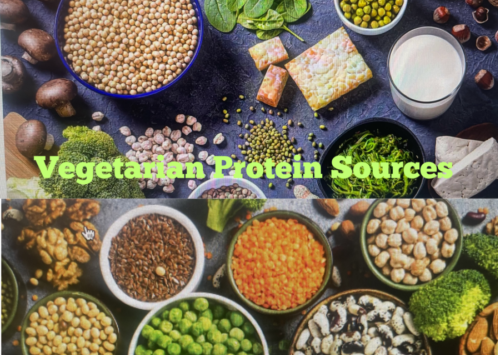
Many plant foods naturally contain protein, including:
- lentils,
- beans,
- chickpeas,
- tofu,
- tempeh,
- edamame,
- Greek yogurt,
- milk,
- nuts,
- seeds,
- oats,
- quinoa,
- and whole grains.
A balanced vegetarian diet can easily meet protein needs for most people.
Approximate Daily Protein Needs
General guidelines:
- Sedentary adults: ~0.8 g per kg body weight
- Active individuals: ~1.0–1.6 g per kg
- Athletes may need more depending on training intensity
For example:
A person weighing 70 kg (154 lbs) may need around:
70×0.8=56 g protein/day70 times 0.8 = 56text{ g protein/day}70×0.8=56 g protein/day
That amount is often easier to achieve than people think.
Myth #2: “Plant Protein Is Incomplete”
This idea comes from the fact that some plant foods are lower in certain essential amino acids.
However, this does not mean vegetarian diets are deficient.
Different plant foods complement each other naturally.
For example:
- grains are typically lower in lysine,
- legumes are typically lower in methionine.
When eaten across the day, they provide a more balanced amino acid profile.
The body does not require every amino acid to be perfectly balanced in every single meal.
What Are Complete Proteins?
A complete protein contains all 9 essential amino acids in sufficient amounts.
Some vegetarian complete proteins include:
- eggs,
- dairy,
- soy foods (tofu, tempeh, edamame),
- quinoa,
- buckwheat.
But even foods that are not individually “complete” can work together beautifully.
Complete Protein Combinations for Vegetarians
1. Rice + Beans
A classic combination found in many cultures.
- rice provides methionine,
- beans provide lysine.
Together they create a more complete amino acid profile.
2. Peanut Butter + Whole Wheat Bread
Whole grains and legumes complement each other well.
This simple meal is:
- affordable,
- filling,
- kid-friendly,
- and protein supportive.
3. Hummus + Whole Grain Pita
Chickpeas + grains create another balanced pairing.
Add vegetables for extra fiber and nutrients.
4. Lentils + Brown Rice
An easy everyday meal packed with:
- protein,
- fiber,
- iron,
- and complex carbohydrates.
5. Yogurt + Nuts + Seeds
Dairy already contains complete protein, while nuts and seeds add:
- healthy fats,
- minerals,
- and additional protein.
6. Tofu Stir Fry with Vegetables and Rice
Soy foods are among the highest-quality plant proteins.
Tofu is:
- versatile,
- nutrient dense,
- and excellent for balanced meals.
High-Protein Vegetarian Foods
| Food | Approximate Protein |
|---|---|
| Lentils (1 cup cooked) | ~18 g |
| Chickpeas (1 cup cooked) | ~15 g |
| Greek Yogurt | ~15–20 g |
| Tofu | ~10–15 g |
| Tempeh | ~15–20 g |
| Edamame | ~17 g |
| Cottage Cheese | ~25 g |
| Peanut Butter (2 tbsp) | ~8 g |
| Quinoa (1 cup cooked) | ~8 g |
Protein Quality Matters, But Variety Matters More
Rather than obsessing over “perfect” protein combinations at every meal, focus on:
- eating a variety of whole foods,
- including legumes regularly,
- balancing meals,
- and getting enough total calories.
Over the course of the day, the body is very effective at using amino acids from different foods.
Final Thoughts
A vegetarian diet can absolutely support:
- good health,
- strength,
- energy,
- and long-term wellness.
The key is not extreme restriction or complicated food rules.
It’s building balanced meals with:
- legumes,
- whole grains,
- vegetables,
- healthy fats,
- and quality protein sources.
With a little planning and variety, vegetarian diets can be both nutritious and deeply satisfying.
Works Cited
- Campbell, Bill, et al. “International Society of Sports Nutrition Position Stand: Protein and Exercise.” Journal of the International Society of Sports Nutrition, vol. 4, no. 1, 2007, p. 8, https://doi.org/10.1186/1550-2783-4-8.
- Carbone, John W., and Stefan M. Pasiakos. “Dietary Protein and Muscle Mass: Translating Science to Application and Health Benefit.” Nutrients, vol. 11, no. 5, May 2019, https://doi.org/10.3390/nu11051136.
- Ganka, Sarah. “Unlocking the Power of Complete Proteins – STAT Wellness.” STAT Wellness – 2020 Dev Site, 2 May 2024, www.statwellness.com/complete-proteins/.
- Gunnars, Kris. “Protein Intake – How Much Protein Should You Eat per Day?” Healthline, 2018, www.healthline.com/nutrition/how-much-protein-per-day.
- “Healthy Monday.” Maxwell School, 2022, www.maxwell.syr.edu/research/lerner-center/healthy-monday. Accessed 8 May 2026.
- Hruby, Adela, and Paul F. Jacques. “Protein Intake and Human Health: Implications of Units of Protein Intake.” Advances in Nutrition, vol. 12, no. 1, Sept. 2020, https://doi.org/10.1093/advances/nmaa097.
- https://www.facebook.com/AmericanAcademyAntiAgingMedicineA4M. “Plant-Based Diet Myths Busted – WorldHealth.net.” WorldHealth.net, 26 July 2024, worldhealth.net/news/plant-based-diet-myths-busted/. Accessed 8 May 2026.
- Pendick, Daniel. “How Much Protein Do You Need Every Day?” Harvard Health Blog, 22 June 2023, www.health.harvard.edu/blog/how-much-protein-do-you-need-every-day-201506188096.
- Tompa, Rachel. “How Much Protein Should We Really Be Eating? Five Things to Know.” News Center, 25 Mar. 2026, med.stanford.edu/news/insights/2026/03/how-much-protein.html. Accessed 7 May 2026.
- Carbone, John W., and Stefan M. Pasiakos. “Dietary Protein and Muscle Mass: Translating Science to Application and Health Benefit.” Nutrients, vol. 11, no. 5, May 2019, https://doi.org/10.3390/nu11051136.
- Gaka, Sarah. “Unlocking the Power of Complete Proteins – STAT Wellness.” STAT Wellness – 2020 Dev Site, 2 May 2024, www.statwellness.com/complete-proteins/.Gunnars, Kris. “Protein Intake – How Much Protein Should You Eat per Day?” Healthline, 2018, www.healthline.com/nutrition/how-much-protein-per-day.